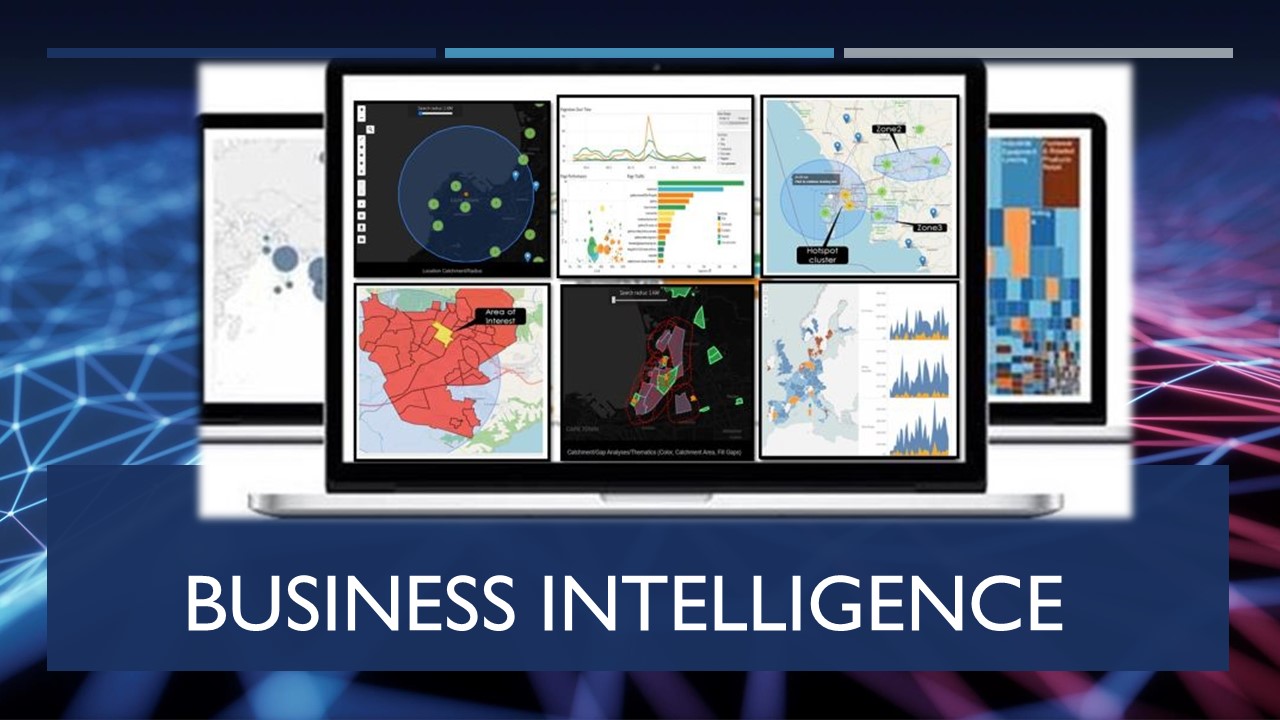

Here's What Every Business & Data Analyst Need's to Know Everything about Business Intelligence (BI).
What is Business intelligence?
Business intelligence (BI) is a technology-driven process for analyzing
data and delivering actionable information that helps executives, managers and
workers make informed business decisions.
Business intelligence refers to the processes and tools used to analyze
business data, turn it into actionable insights, and help everyone in an
organization make better-informed decisions. Also known as a decision support
system (DSS), a BI system analyses current and historical data and presents
findings in easy-to-digest reports, dashboards, graphs, charts, and maps that
can be shared across the company.
Who uses business intelligence?
Business intelligence plays an important role in helping business improve
their decision-making.
· The retail Industry-Monitoring
of inventory is one of the biggest BI benefits of the retail industry, from the
dispatchment of the order to the point of sale. Using data warehousing, BI
empowers retailers to track the supply chain and offer oversight throughout the
process.
· Media -Business
intelligence software has the ability to directly integrate your social media
data into your other BI dashboards.
· Telecommunication-The
main goal of utilizing this technology within a Telco business is to
enhance operational decision-making and strategic planning. BI
provides telecommunication with critical insight and information that can be
used to increase revenue, improve operational efficiency, and enhance competitiveness.
· Public Sector-They
can independently create analyses especially addressing their needs and derive
new insight from relevant government processes.
· Property- People
who want to analyze real estate data do not have to devote hours. If
clients like a property in a particular location, the BI tool can offer them a
view of other nearby properties, which helps them compare their choices and
make better decisions..
· Insurance-It
enables the organization to optimize its processes and identify the areas where
it is the strongest (and weakest). This puts the insurer in a much better
position but is not a silver bullet.
· Financial Services-Business
Intelligence in finance processes helps companies track and analyze
customer data to determine buying habits and patterns. By fully understanding
the needs and desires of your customers, you can optimize services to increase
current sales and ensure long-term loyalty to the entire company.
Why should I have business intelligence?
Business intelligence, or BI, processes help you organize your data
so it can be easily accessed and analyzed.
The main use of business intelligence is to help business units,
managers, top executives, and other operational workers make better-informed decisions
backed up with accurate data. It will ultimately help them spot new business
opportunities, cut costs, or identify inefficient processes that need
re-engineering.
· Ability to gain
customer insights
With effective business intelligence, businesses can better understand
their customers by analyzing their buying patterns and creating user profiles.
This helps them to create better products and product experiences for their
customers.
· Improve business
operations visibility
Organizations that leverage business intelligence will have better
control over their business processes. They have better visibility of what’s
going on in the organization.
· Get Actionable
Insights
The most important thing while taking any business decision is to have
enough data to back the decision. With traditional reporting, it’s not as easy
and convenient to get actionable insights as it is with business
intelligence.
· Improve efficiency
across the organization
Having a proper business intelligence system in place considerably
improves the efficiency of the overall organization. This in turn positively
impacts the overall revenue of the organization.
· Real-time data
availability
A business intelligence system provides real-time data at all times.
This in turn reduces the risk of any possible human error while preparing any
critical data reports. Having access to real-time data enables the business to
stay informed about the health of the company at all times. This helps the
organization to take data-backed decisions every time they need to make
one.
· Better marketing
efforts
A business intelligence system enables the marketing team of the
organization to create better marketing campaigns that provide better Return on
investment (ROI) by providing them a convenient way to access data regarding
the current and past campaigns.
· Gives the business a
competitive advantage
Apart from all the benefits of using business intelligence, another
great benefit of using BI is a competitive advantage. Business Intelligence
enables businesses to have insight into what their competitors are doing and
enables them to make informed and educated decisions for plans.
When is the right time to have business
intelligence?
When you need quick turnaround on your decisions, which is essential in
a fast-changing world. The better insights you have, the better decisions you
can make. Getting insights takes having the right tools and solutions that will
help you understand the data better.
BI helps businesses and organizations ask and answer questions of
their data. So now you know what BI is, and how it works. But how does BI
actually help businesses? BI is more than just software—it's a way to keep a
holistic and real-time view of all your relevant business data.
Gain New Customer Insights: One of the primary reasons
companies are investing their time, money, and efforts into Business
Intelligence is because it gives them a greater ability to observe and analyze
current customer buying trends.
Improved Visibility: Business Intelligent
organizations have better control over their processes and standard operating
procedures, as the visibility of these functions is improved by a BI system.
Actionable Information: An effective Business
Intelligence system serves as a means to identify key organizational patterns
and trends. A BI system also allows you to understand the implications of
various organizational processes and changes, allowing you to make informed
decisions and act accordingly.
Efficiency Improvements: BI Systems help improve
organizational efficiency which consequently increases productivity and can
potentially increase revenue. Business Intelligence systems allow businesses to
share vital information across departments with ease, saving time on reporting,
data extraction, and data interpretation.
Where can business intelligence be used?
Where Is BI Used? Sales, marketing, finance and operations
departments use business intelligence. Tasks include quantitative
analysis, measuring performance against business goals, gleaning customer
insights and sharing data to identify new opportunities.
- Finance:
By blending financial data with operations, marketing and sales data,
users can pull insights from which decisions can be acted upon and understand
factors that impact profit and loss.
- Marketing:
Business intelligence tools help marketers track campaign metrics from a
central digital space. BI systems can provide real-time campaign tracking,
measure each effort’s performance and plan for future campaigns. This data
gives marketing teams more visibility into overall performance and provides
contextual visuals for sharing with the company.
- Sales:
Sales data analysts and operation managers often use BI dashboards and
key performance indicators (KPIs) for quick access to complex information like
discount analysis, customer profitability and customer lifetime value. Sales
managers monitor revenue targets, sales rep performance along with the status
of the sales pipeline using dashboards with reports and data visualizations.
- Operations:
To save time and resources, managers can access and analyse data
like supply chain metrics to find ways to optimize processes.
Business intelligence can also ensure that service level agreements are met and
help improve distribution routes.
How will business intelligence benefit you?
Business intelligence, or BI, processes help you organize your data so
it can be easily accessed and analyzed. Decision-makers can then dig in and get
the information they need quickly, empowering them to make informed decisions.
But improved decision-making is just one benefit of business
intelligence.
Improve sales
A Business Intelligence system is able to identify trends in
sales, possible product improvements, customer preferences and business
opportunities by creating detailed reports. This invaluable data can be used to
drive sales and assist with negotiations between businesses and suppliers.
Accurate reporting
An organization’s data – financial, operations and sales – can be used
by a Business Intelligence system to generate accurate reports as either visual
representations (charts, tables or graphs) or written information.
Better decision-making
Using the aforementioned accurate reporting systems, businesses are
better positioned to make impactful decisions. By assessing productivity and
revenue by department, Business Intelligence is able to set up alerts about
overall performance so that a business plan can be clearly outlined.
Identify opportunities and trends
The data analysis also allows companies to compare its strengths and
weaknesses with competitor organizations, thereby analyzing market conditions
and identifying trends. This means lucrative opportunities can be acted upon
while potential business challenges are addressed.
Operational efficiency
The streamlining of various data sources through Business Intelligence
will help with overall operations, saving management time in tracking down
information.
Reduce waste
The unified nature of a Business Intelligence system allows it to
analyse inter-departmental transactions, noting any areas of inefficiency, loss
or waste.
By the way, did you know that you can Paint Masterpiece Visualization
Like A BI Expert Without Ever Using SQL, Scripting or Programming with EasyMaps
BI? Yep, it's true.
Go to our website, click on Claim Special now 100% Risk Free
Guaranteed, you will then be presented with a form, fill in the form and
click the Submit button for your free 30 days 100% Risk Free Guaranteed trial
account to be activated.
Thanks
#asymaps #geospatial #spatialAnalysis #locationIntelligence #gis #mapping #businessIntelligence #analytics #visualization